Skip to content
Ideas for a more human education
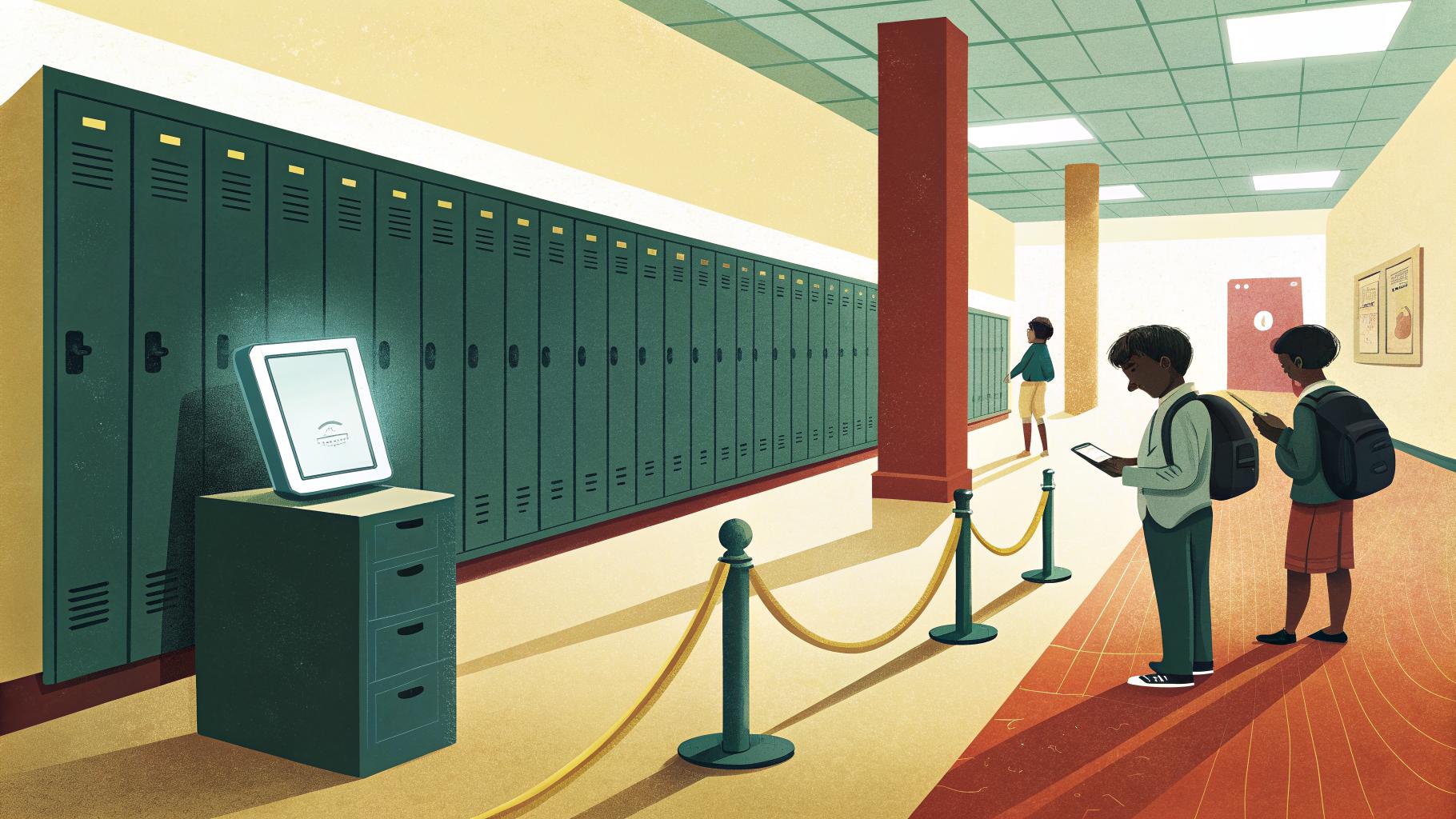
Glowing device behind a barrier rope in a school hallway, examined by a figure with a magnifying glass while students wait.
Illustration: Human Learning Review, made with AI. It does not depict real people or events.
News · Policy & Ethics

New York and Los Angeles Ban Student-Facing AI (For Now). Should Other Schools Follow?

Source: EdSurge, . Summarized by Human Learning Review.

Summary

This EdSurge article looks at 2 moratoriums on student-facing generative AI, in New York City and Los Angeles, alongside a new report from the American Psychological Association. It asks whether other schools should follow and reads the announcements as a shift from rapid AI adoption toward more deliberate evaluation.

On Sept. 2, New York City announced a 1-year moratorium for public elementary and middle school students, and Los Angeles Unified restricted generative AI on all student-issued devices across all grades for the 2026-27 school year. The APA report followed the next day, urging thorough analysis of edtech tools and naming generative AI as a particular risk. An IBM survey cited in the piece found 76% of middle school teachers and 73% of high school teachers use AI in class weekly. Chicago and Clark County allow district-approved tools, and Miami-Dade approved a measure to develop guidelines after a large student rollout.

Nicole Barnes, the report's lead author, says many apps treat engagement and usage data as proof of learning, and she sees the same problem in AI tools. She calls the 2 bans a pause that lets schools set their own pace, and she says districts should look for evidence that a tool helps students learn before deciding. If they allow AI, she wants responsibility shared:

  • teachers need classroom guidance
  • school leaders need procurement and implementation standards
  • districts need evidence requirements and data protections
  • policymakers need clear expectations for claims about children's learning

St. Louis middle school teacher Dan Clark expects other districts to follow. When his district blocked AI overviews in web searches on school devices, his students asked why, and he used that as a chance to talk it through. He argues students will find workarounds, so they should be part of the discussion. The article concludes that educators broadly see a ban without critical dialogue as a missed opportunity.

Main points

  • New York City paused student-facing generative AI for 1 year in public elementary and middle schools, and Los Angeles Unified restricted it on student devices across all grades for 2026-27.
  • A new APA report led by Nicole Barnes recommends checking edtech tools for evidence that they help students learn, and it names generative AI as a particular risk.
  • Barnes argues that many edtech apps use engagement and usage data as a stand-in for learning, which she says misleads the public about how well they work.
  • The article reports that in an IBM survey, 76% of middle school teachers and 73% of high school teachers said they use AI in their classrooms weekly.
  • Middle school teacher Dan Clark argues that restrictions should come with open discussion, and says his students' questions about a blocked AI search feature became a teaching opportunity.

How the 5 largest districts handle student AI

Moratoriums

  • New York City pauses use in elementary and middle schools
  • Los Angeles blocks tools on student devices, all grades

Guided use

  • Chicago and Clark County allow district-approved tools
  • Miami-Dade is writing guidelines after a large student rollout
Data and findings: EdSurge, “New York and Los Angeles Ban Student-Facing AI (For Now). Should Other Schools Follow?.” Graphic: Human Learning Review.

This page is a short summary. The full piece belongs to EdSurge.

Read the original at EdSurge
A little room for reflection

A more considered
view of education.

Ideas worth sitting with. Practical questions worth asking. Human Learning Review, in your inbox.