Skip to content
Ideas for a more human education
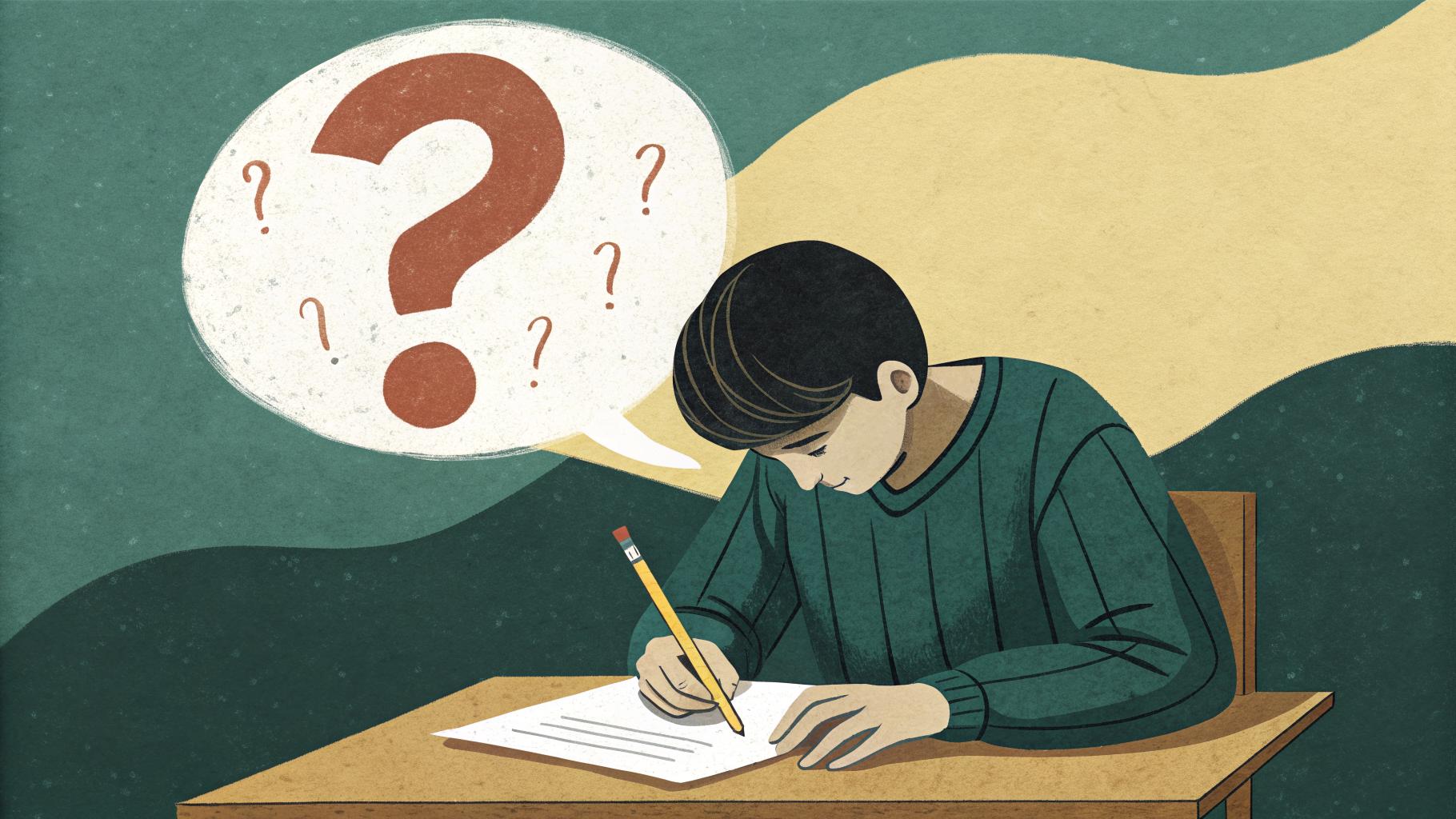
Student revising a draft as a dotted line links a question-mark speech bubble to rewritten lines on the page.
Illustration: Human Learning Review, made with AI. It does not depict real people or events.
Research · Teaching & Learning

Thinking Is Not Writing: Designing AI Chatbots to Connect Reasoning and Revision

Source: arXiv, . Summarized by Human Learning Review.

Summary

This arXiv paper presents Maike, an AI chatbot built to support secondary-school students' argumentative writing. Its question is how AI writing support can connect what students reflect on with how they revise. The authors start from the position that helping students write arguments with AI requires linking their reflection to their revision process.

Maike is a Socratic chatbot. It diagnoses the arguments in a student's essay and asks targeted questions based on that diagnosis, while a student model tracks the learner across 2 modes, Think and Write. It supports argumentative reasoning without generating essay text for the student. To test it, the authors ran a classroom study with 65 secondary-school students, who used either Maike or a control chatbot. The control shared Maike's interface and language model, and it offered the same Think and Write modes.

About 40% of students improved their essay scores, and the abstract doesn't report a score advantage for either group. Differences showed up in how students worked. Maike users engaged more in idea-level dialogue, 56% compared with 44% for the control group, and they moved back and forth between discussion and editing. Across the study, transitions from ideas discussed in dialogue to actual revisions were positively associated with score gains.

From these results the authors propose a design target for AI writing support, which is coordinating reflection with revision. They describe 2 contributions, an architecture for supporting argumentative reasoning without producing essay text and an approach that links interaction patterns to writing processes and outcomes. They argue that as AI enters classrooms, understanding these connections is needed both to judge its educational value and to design for it.

Main points

  • The authors built Maike, a Socratic chatbot that diagnoses student arguments and asks targeted questions, drawing on a student model across Think and Write modes without generating essay text.
  • In a classroom study, 65 secondary-school students used either Maike or a control chatbot built on the same interface and underlying language model.
  • Roughly 40% of students raised their essay scores, and the abstract does not report a score advantage for Maike over the control.
  • Maike users spent more of their dialogue on ideas (56% vs. 44%) and moved back and forth between discussion and editing.
  • The authors found that carrying ideas from dialogue into revisions was positively associated with score gains, and they propose coordinating reflection with revision as a design target.

The Maike classroom study in figures

65Secondary-school students in the classroom study
40%Approximate share of students who improved scores
56%Maike users' share of idea-level dialogue
44%Control users' share of idea-level dialogue
Data and findings: arXiv, “Thinking Is Not Writing: Designing AI Chatbots to Connect Reasoning and Revision.” Graphic: Human Learning Review.

This page is a short summary of a research paper. The full piece belongs to arXiv, and preprints may not have been peer reviewed.

Read the original at arXiv
A little room for reflection

A more considered
view of education.

Ideas worth sitting with. Practical questions worth asking. Human Learning Review, in your inbox.

Thinking Is Not Writing: Designing AI Chatbots to Connect Reasoning and Revision: summary and main points | Human Learning Review