Skip to content
Ideas for a more human education
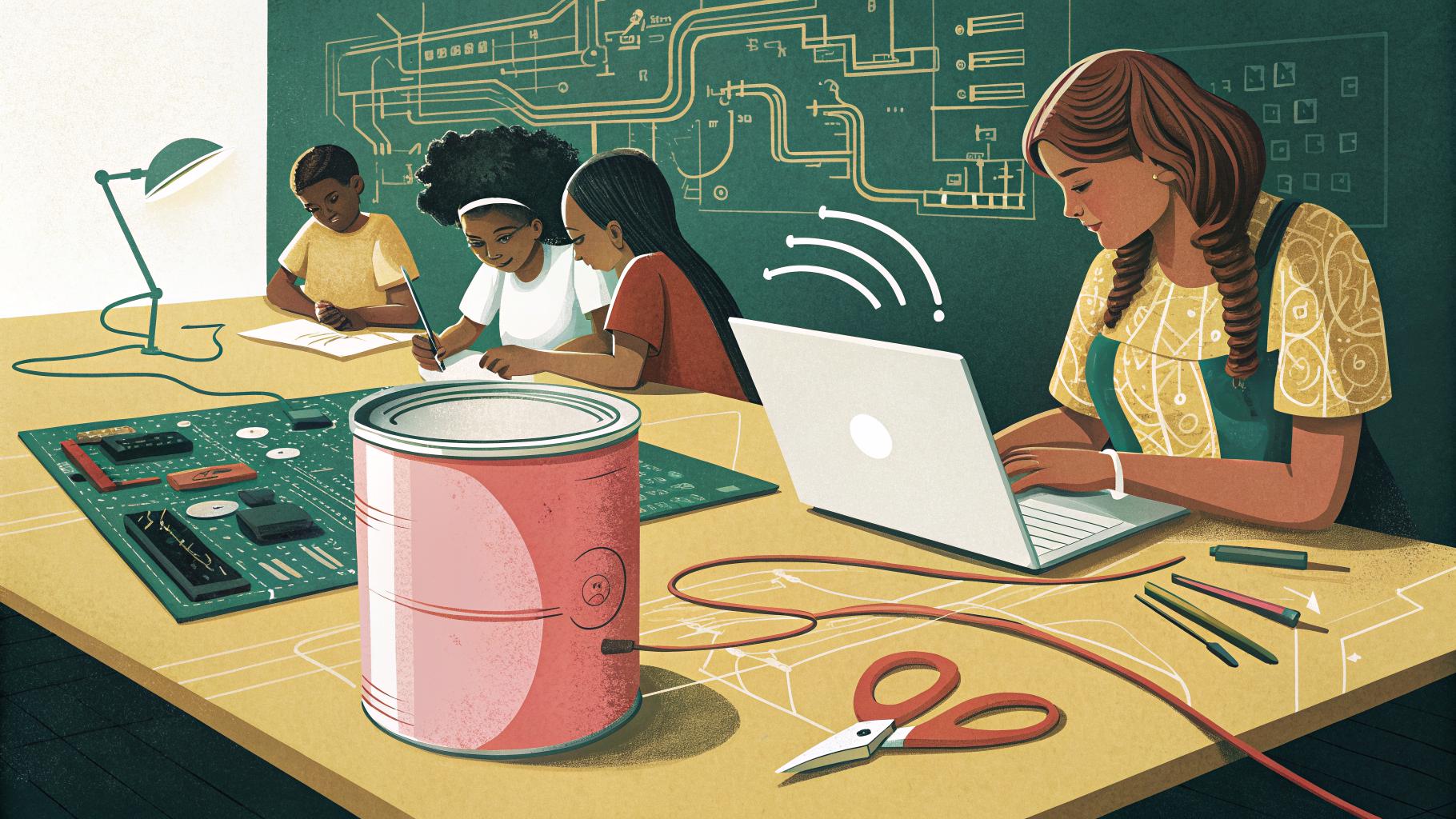
Girls building circuits around a laptop at a workbench, an unused can of pink paint set aside.
Illustration: Human Learning Review, made with AI. It does not depict real people or events.
Research · Access & Inclusion

Beyond “painting in pink”: A critical case study of all-girls generative AI workshops in a European makerspace and implications for gender equity in computing

Source: Computers and Education: Artificial Intelligence. Summarized by Human Learning Review.

Summary

This case study asks how all-girls workshops built around 2 generative AI tools in a European makerspace worked as a way to address girls' low representation and participation in computing. The authors analysed qualitative, multimodal data, including 15 interviews with families and practitioners, 4 reflective sessions, observation fieldnotes and 44 AI-generated images, using Harding's multi-level framework and feminist pedagogy as critical lenses.

  • Stakeholders generally viewed the all-girls workshop format positively.
  • Practitioners supported girls' participation by attending to representation and building relationships, and they adjusted their approach in response to the girls.
  • The workshop topic was judged inappropriate, and there was little collaboration between peers.
  • The selected GenAI tools were hard for the girls to access, and prompt-writing raised language barriers.
  • The authors read these problems as signs that girls' voices and agency, along with the strengths they bring, were pushed to the margins.

The authors argue that gender-equity efforts in computing need to move past cosmetic girlification, where activities are restyled to look girl-friendly, and instead put girls' perspectives and strengths at the centre. They call for changes at symbolic, structural, social and individual levels. From this they propose a girl-centred, multi-level framework with practical guidance on using GenAI to promote gender equity in computing, and they call for more research and practice on equity-oriented uses of the technology, which they describe as largely unexplored.

Main findings

  • Families and practitioners generally responded well to running the GenAI workshops as all-girls sessions.
  • Practitioners worked to support girls through representation and relationship building, and adapted their approach to the girls' responses.
  • Problems included an unsuitable workshop topic and little peer collaboration, along with GenAI tools the girls found hard to access and language barriers when writing prompts.
  • The authors interpret these challenges as evidence that girls' voices and agency were marginalised in practice, despite the girls-only format.
  • The authors argue equity interventions in computing should centre girls through changes at symbolic, structural, social and individual levels, and propose a girl-centred framework for doing so.

This page is a short summary of a research paper. The full piece belongs to Computers and Education: Artificial Intelligence, and preprints may not have been peer reviewed.

Read the original at Computers and Education: Artificial Intelligence
A little room for reflection

A more considered
view of education.

Ideas worth sitting with. Practical questions worth asking. Human Learning Review, in your inbox.

Beyond “painting in pink”: A critical case study of all-girls generative AI workshops in a European makerspace and implications for gender equity in computing: summary and main points | Human Learning Review