Skip to content
Ideas for a more human education
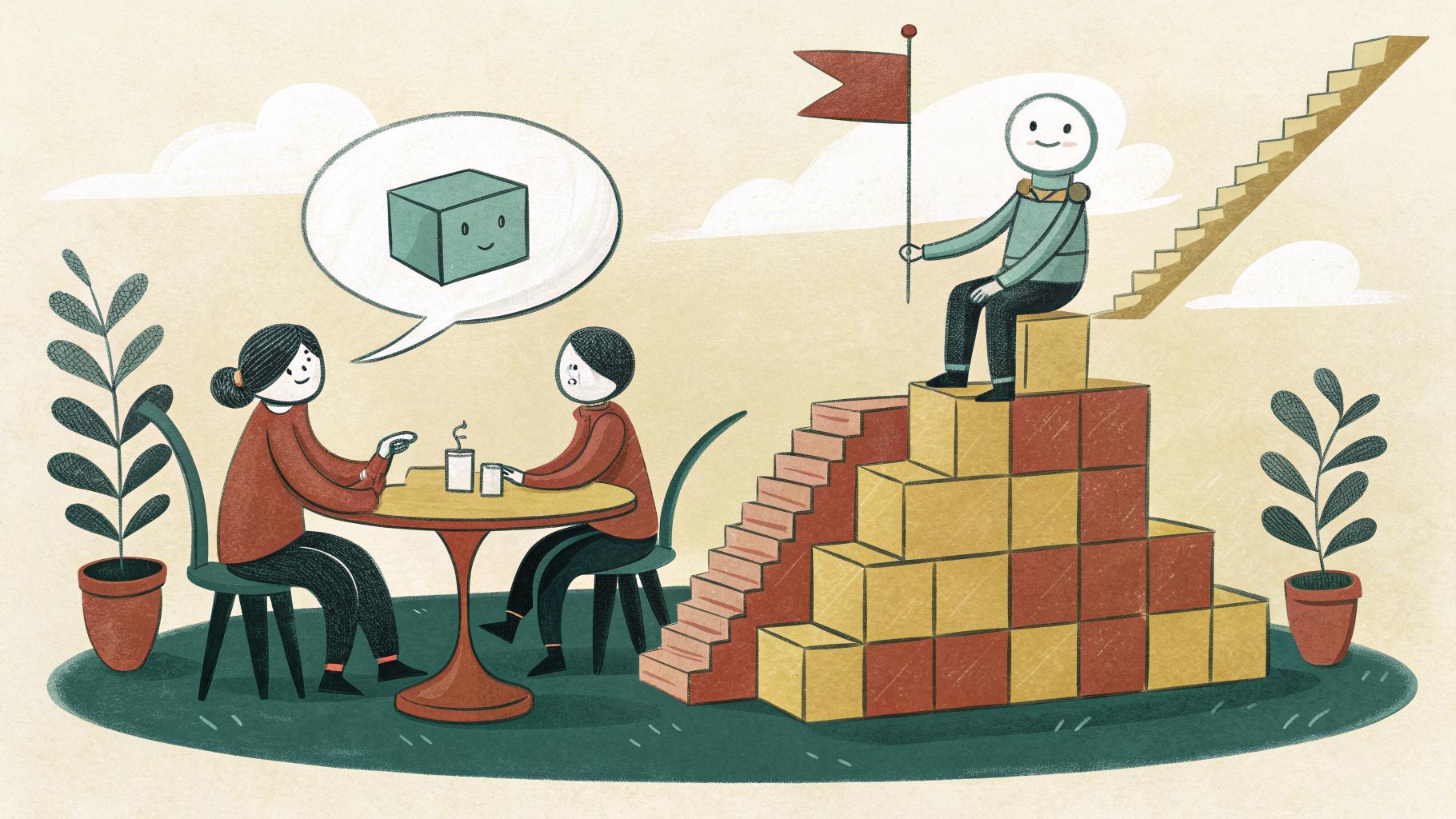
Three simple figures build with blocks at a table, helped by a floating chatbot bubble, beside a staircase leading to a flag.
Illustration: Human Learning Review, made with AI. It does not depict real people or events.
Research · Teaching & Learning

Effects of AI chatbot‐supported cooperative flipped classroom on student collaboration, self‐regulated learning and academic performance: A mastery learning perspective

Source: British Journal of Educational Technology, . Summarized by Human Learning Review.

Summary

This quasi-experimental study asks whether a cooperative flipped classroom supported by an AI chatbot improves university students' collaboration and self-regulated learning, along with their academic performance, and whether students with different levels of prior knowledge respond in different ways. Drawing on mastery learning theory, it compared 154 junior students over 11 weeks with the same instructor. One group used a chatbot during pre-class group work, and a control group followed conventional group-based flipped learning. Interviews with 10 students from the chatbot group were examined with Epistemic Network Analysis.

  • The chatbot group scored significantly higher than the control group on posttest measures of collaboration and self-regulated learning.
  • The chatbot group also earned significantly higher posttest academic performance scores.
  • Within the chatbot group, students who interacted with the chatbot more did significantly better academically than those who interacted less.
  • Students with lower prior knowledge showed denser collaboration networks, needing more cognitive effort and more frequent switching between dimensions to coordinate group work.
  • Students with higher prior knowledge showed stronger links between self-regulated learning dimensions such as seeking and reflecting, which the authors read as more integrated self-regulation.

The authors conclude that the results support mastery learning theory and that a chatbot can act as a mastery-oriented scaffold, helping groups divide tasks and clarify goals during pre-class discussion so students arrive better prepared for class. They recommend differentiating support by prior knowledge, with clearer goals and stronger cognitive scaffolding for learners who start with less, and tasks centred on integrating and reflecting on knowledge for higher achievers. They also suggest the approach suits large or resource-constrained teaching settings.

Main findings

  • Students in the chatbot-supported cooperative flipped classroom outperformed a conventional flipped-learning control group on posttest collaboration, self-regulated learning and academic performance measures.
  • The authors found that heavier chatbot use was linked to significantly better academic performance within the experimental group.
  • Interview analysis suggested lower prior knowledge students spent more effort coordinating collaboration, while higher prior knowledge students showed more integrated self-regulation.
  • The authors argue chatbots can scaffold pre-class group work in a mastery learning approach and recommend tailoring support to students' prior knowledge.

Patterns by prior knowledge with chatbot support

Lower prior knowledge

  • Denser collaboration networks
  • More cognitive input to coordinate group work
  • More frequent switching between dimensions
  • Benefit from clearer goals and stronger scaffolding

Higher prior knowledge

  • Stronger links between seeking and reflecting dimensions
  • More integrated self-regulatory behaviour
  • Benefit from tasks stressing integration and reflection
Data and findings: British Journal of Educational Technology, “Effects of AI chatbot‐supported cooperative flipped classroom on student collaboration, self‐regulated learning and academic performance: A mastery learning perspective.” Graphic: Human Learning Review.

This page is a short summary of a research paper. The full piece belongs to British Journal of Educational Technology, and preprints may not have been peer reviewed.

Read the original at British Journal of Educational Technology
A little room for reflection

A more considered
view of education.

Ideas worth sitting with. Practical questions worth asking. Human Learning Review, in your inbox.

Effects of AI chatbot‐supported cooperative flipped classroom on student collaboration, self‐regulated learning and academic performance: A mastery learning perspective: summary and main points | Human Learning Review