Skip to content
Ideas for a more human education
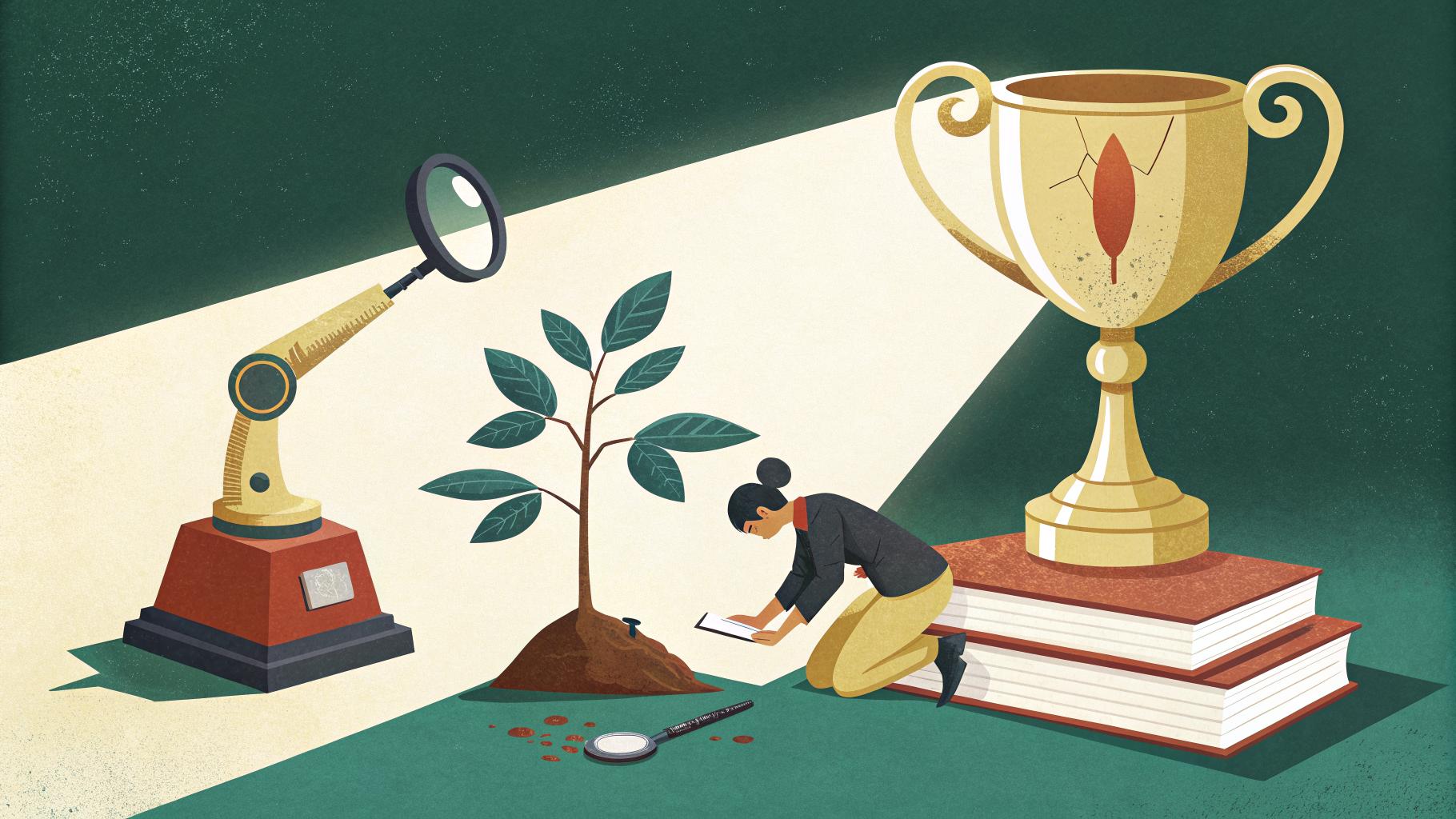
Cracked trophy beside a robot arm with papers, while a student curiously examines a seedling with a magnifying glass.
Illustration: Human Learning Review, made with AI. It does not depict real people or events.
Opinion · Teaching & Learning

How AI Is Breaking the Way We Reward High-Achieving Students

Source: EdSurge, . Summarized by Human Learning Review.

Summary

This EdSurge opinion piece, part of a series on educator experiences, is written by a teacher with 13 years in education. It asks what high achievement means once AI can produce the polished essays and correct answers schools have long rewarded, and which student behaviors deserve recognition now.

The author draws on personal history, describing a shift from doing the minimum in early high school to becoming a committed scholar after an AP English course on the Faustian legend, then going on to earn 2 master's degrees. The author now sees that former self in students who push for higher grades and extra credit. Some of these students, the author reports, have started checking their interpretations against AI or trusting its wording over their own. The piece cites a Common Sense Media survey in which 70% of U.S. teens reported using AI for schoolwork, and among those users, 38% said it leads them to generate fewer ideas while 39% felt they miss out on learning. The author also points to research finding complicated links between externally driven perfectionism and educational commitment among adolescents.

The author suggests AI may be exposing how narrowly schools have defined achievement, and proposes looking at the thinking behind finished work. Examples of evidence the author wants to see include:

  • the question that started a student's research
  • a first claim and why the student dropped it
  • the source that changed the student's thinking
  • where AI contributed and where the student rejected its suggestion

The author says high achievers should still learn to use AI, citing Digital Promise's AI literacy framework, and proposes measuring curiosity, revision, ethical judgment and the confidence to disagree with AI. School leaders, the author argues, need shared language about what human achievement looks like when AI is present, so standards don't vary from one classroom to the next.
Main points

  • The author, a teacher with 13 years in education, argues that AI's ability to produce polished work in seconds is unsettling high-achieving students whose identities rest on academic competence.
  • The author reports that some strong students now doubt their own interpretations and check them against AI, a pattern the author finds more worrying than an obvious AI-generated essay.
  • Citing a Common Sense Media survey, the piece notes that among teens who use AI, 38% said it leads them to generate fewer ideas and 39% felt they miss out on learning.
  • The author argues that schools should assess how students reached their conclusions, such as claims they abandoned and AI suggestions they rejected, because that process is harder to automate.
  • The piece calls on school leaders to agree on shared language about what human achievement looks like when AI is present, so expectations stop shifting from classroom to classroom.

How teens say AI affects their schoolwork

70%U.S. teens who reported using AI for schoolwork
38%Teen AI users who generate fewer ideas themselves
39%Teen AI users who feel they miss learning
Data and findings: EdSurge, “How AI Is Breaking the Way We Reward High-Achieving Students.” Graphic: Human Learning Review.

The editor’s perspective

If a polished essay now takes seconds, what was the A paying for?

EdSurge's summary says we have to redefine high achievement and reward intellectual curiosity. I agree with where that points. For years we've graded the finished thing because it was the easiest thing to see.

We've been paying for the receipt and assuming someone did the shopping.

Schools reward whatever they can measure, and students learn fast what that is.

That's where I'd press. Once curiosity earns points, our sharpest students will learn to perform it, the way they learned to perform polish. I use these tools myself, so I know how cheap the look of effort has become.

The case for grading products is fair. They're visible, and families understand them.

And I'd still move the weight. This week, ask one student to talk you through a choice they'd make differently now, and let that conversation count.

This page is a short summary. The full piece belongs to EdSurge.

Read the original at EdSurge
A little room for reflection

A more considered
view of education.

Ideas worth sitting with. Practical questions worth asking. Human Learning Review, in your inbox.